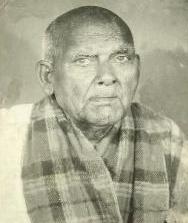
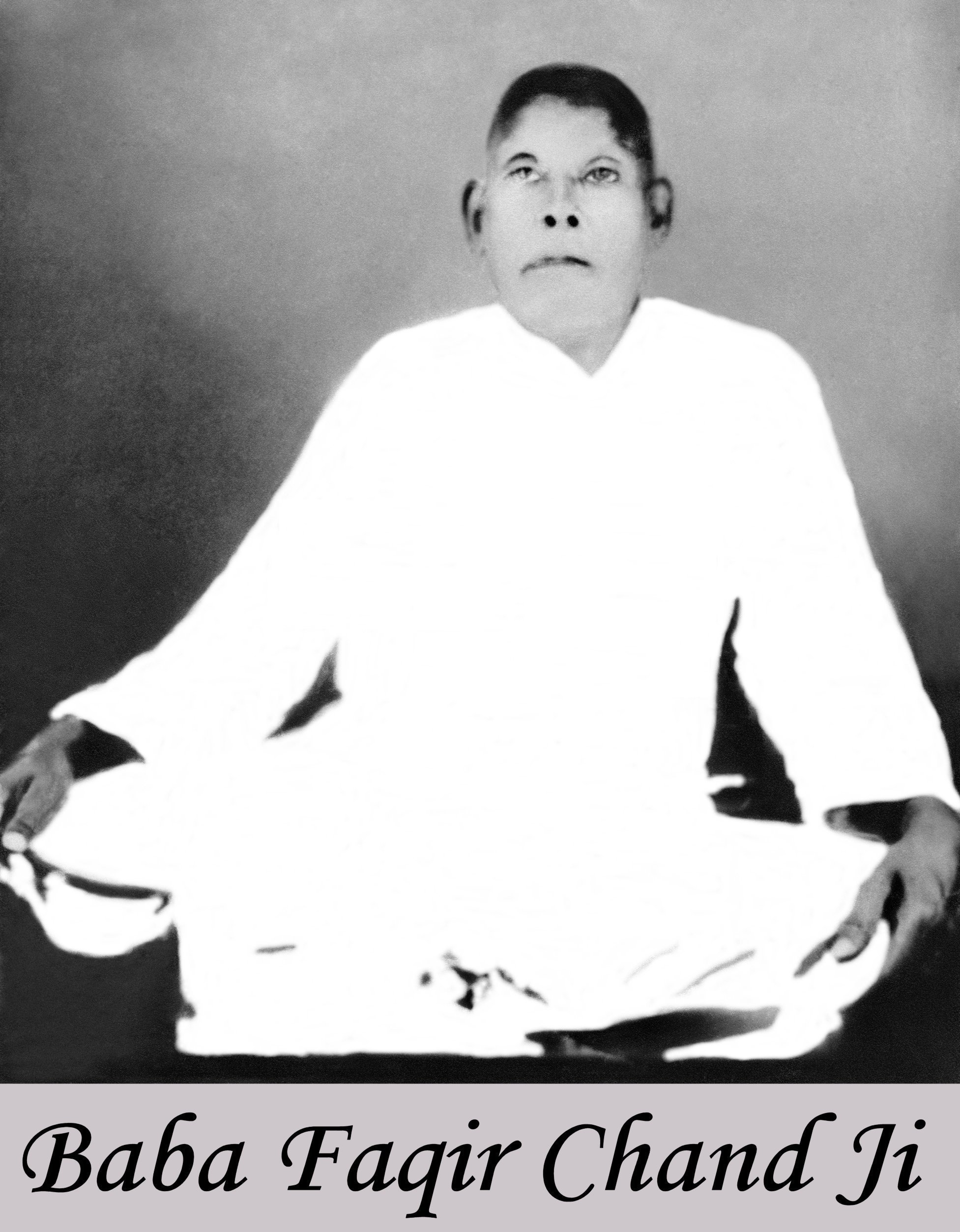
Birth and Early Life
The actual birth date of Baba Faqir Chand Ji is unknown; however, in 1978 he was believed to be 120 years old, therefore his birth year is calculated as 1858. He was born in Lahore, Pakistan into a Thakar Rajput family with the last name Chauhan. He was the youngest of five siblings (four brothers and one sister). While his brothers eventually settled in Bombay, Baba Ji spent his childhood in “Palwana Wali Gali” in Lahore. This area was famous for wrestling, and many renowned wrestlers resided there. Baba Ji himself practiced wrestling actively in his youth before later joining the British Army.
In Custody of the British Army
Baba Faqir Chand Ji served in the British Army before the independence of India, where he was in charge of the kitchen. An intruder, later revealed to be his own sister, poisoned the army’s food in an attempt to frame him. Baba Ji was taken into custody by the army police on charges of mixing poison—an offense that commonly carried the death penalty during that era.
While in prison awaiting his court hearing, he prayed fervently to God to prove his innocence. He promised that if his life were saved, he would devote the remainder of it entirely to the Divine. On the day of the hearing, to the surprise of everyone, he was freed of all charges and released. True to his vow, he left the army and his hometown, traveling from place to place in search of a true saint who could guide him to merge with God.
Meeting the True Saint: Baba Heera Nand Ji
While visiting a friend in Lahore, Baba Ji was invited to a satsang led by Baba Heera Nand Ji (Hoshiarpur Wale). Having been disappointed by many self-proclaimed saints in the past, Baba Ji initially refused. When his friend persisted, he agreed to attend but silently demanded three specific things as a test: a sweet paan (betle leaf), a soda (carbonated drink), and a tanga (horse carriage) for a ride.
Upon completion of the satsang, Baba Heera Nand Ji sent a pupil to fetch exactly those three items and another to call Baba Faqir Chand forward. Astonished that the Saint knew his inner demands, Baba Ji realized he was in the presence of a true Master. He requested to be accepted as a pupil and moved into the Guru’s ashram, Anand Puri, in Pakistan. After the Partition, he moved with his Guru to Nangal Behalan, District Hoshiarpur.
The Granting of a Boon
Observing Baba Ji’s deep devotion, Baba Heera Nand Ji offered to grant him a wish. Baba Ji repeatedly refused to ask for anything for himself. Finally, under the Guru’s direct order to ask for at least one thing, Baba Ji requested his Guru’s Khadava (slippers). Baba Heera Nand Ji gave them to him and promised that Baba Ji no longer needed to attend satsang every day, as the Guru would come to meet him once daily.
Baba Ji then traveled through the villages of Gurdaspur, preaching his Guru’s message and performing Kar-Seva to build and repair several Temples, Gurdwaras and Gaushalas (Cowsheds).
Life in Dhakoana, Qadian (1953-1978)
In 1953, Baba Ji moved to the village of Dhakoana, Qadian, an area known as the town’s funeral home. He built a small Kutia (room) there for meditation and lived with his wife (Mata Ji) and his son, Gurcharan Das, who later became a doctor (RMP) in Qadian. Baba Ji lived a life of extreme simplicity, often picking leftover grains from the funeral area to grind into flour for his bread. He kept many cows, calling them by name and cutting their grass himself. It is believed that through his blessings, some of his cows reached Sachkhand.
During these 25 years, it is known that Baba Heera Nand Ji and Bhagwan Krishan Ji met Baba Ji daily. Baba Ji was often seen crying in divine love, saying sadly on rare occasions in Hindi, “Oh Nahi Aya aaj” (He did not come today).
The Lesson of Langar Seva
Once, during a financial crisis for the Purnima Langar, Baba Ji sent a follower to ask a neighbor—a wealthy farmer with two acres of cauliflowers—for a donation. The farmer refused and spoke ill of Baba Ji, questioning his holiness. Baba Ji said nothing, but soon after, the farmer’s entire crop perished. The farmer eventually lost his property and land, serving as a reminder that saints are messengers sent to fight the sins of society.
The Philosophy of Simple Living
Baba Ji was completely against those who wore special “Bhekh” (outward dressings) to appear as saints but lacked spiritual reach. He believed a true saint is known by their ability to help human beings, not to grab money or property. He lived his life according to the verse: “Bhekh Dkhaio Jagat Ko, Logan Ko Bas Keen, Annt Kaal Katti Katio Bass Narak Mea Lean.”
Before his passing, he expressed his deep desire to help the needy of society. To honor this wish, the Baba Faqir Chand Ji Memorial Trust was established to continue his mission of welfare and service.